“You can have a lovely building but if the teaching’s no good, the thing’s not going to work.”
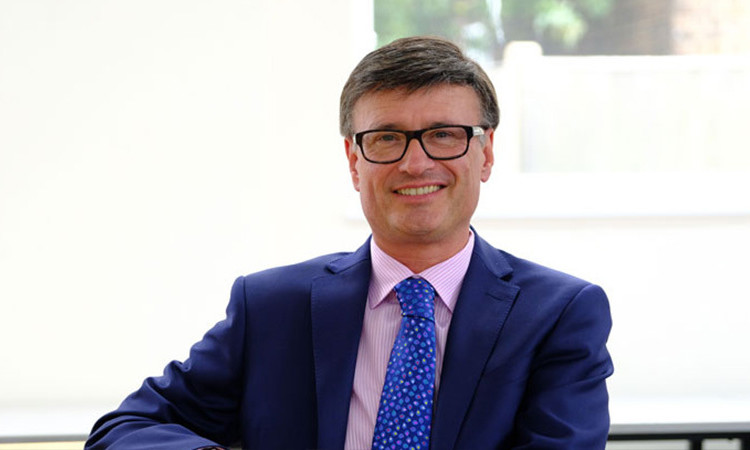
In this episode, we speak to Sir Dan Moynihan, CEO of the Harris Federation. Beginning as an economics teacher in Tower Hamlets in the 1980s, he became a head teacher in 1999, and the principal of what was then the Harris City Technology College in 2005. The Harris Federation was founded the following year, and now runs 55 schools. He has spent twenty years overseeing its growth.
We discussed:
- London schools in the ’80s: “ Nobody could imagine that it was as bad as it was back then.”
- The difference the Education Reform Act made to leading schools
- How he turned around his first school: “Sounds obvious now.”
- Why he moved to Harris City Technology College and how he began building a trust
- How Harris balances prescription and autonomy in school improvement
- The role of the the headteacher: “You can have a hero head – the problem is that’s not sustainable.”
- How he keeps improving, and what he’s working towards now
Dan’s career encapsulates the dramatic improvements in English schools, and the underlying changes which have made them possible. The authority with which he can speak about turning around one school – and leading fifty – made this a particularly interesting interview.
You can listen to the episode on Spotify, or Apple Podcasts, or read the full transcript below, lightly edited for clarity.
Tell us a bit about your early teaching career before you became a head teacher. What drew you into teaching in the first place? What were schools like in the ’80s and ’90s?
I first went into accountancy. I left university with an economics degree and went to one of the Big Five prestigious accountancy firms, as was then. I was surprised to find that it was a club of public-school boys from Oxford and Cambridge. There’s nothing wrong with that, but I felt there was a great deal of arrogance and condescension [about] the rest of the world. Having come from a relatively disadvantaged background, and gone to quite a tough school in central London, I thought there were better things I could be doing than auditing big companies and checking invoices. So I decided to go and teach, which is something I hadn’t thought about until I had the experience of accountancy. I hated accountancy with a vengeance, but it was very useful, as things turned out, in my leadership career. It was a social justice thing. The City is still not entirely fair, but it was a very different place to how it is today.
You said it helped you in your leadership journey. When I interviewed Nick Gibb, he talked about how his KPMG training had taught him to pay attention to detail, which followed through to his approach to reading statutory instruments. In what ways did it help you?
Understanding budgeting, the way that big organisations work, what quality looks like; seeing firms that were and weren’t effective. In the end, a school has a budget to manage. You want to get the best outcome for that budget – pound for pound – for children. I found knowing something about the technology of value for money from a commercial perspective useful in running schools better.
You went from that into London schools, teaching in the ’80s and ’90s, starting in Tower Hamlets. For many listeners this will be ancient history. Tell us a bit about what it was like teaching, and what the schools were like.
It is archaeology in some sense; it’s a while ago now. Younger listeners may be shocked to know that London in the ’80s and ’90s was the lowest-achieving area in the country. Schools were dreadful and the press was full of stories about poor standards in London. Among ethnic minorities, like the Bengali population in Tower Hamlets – standards were absolutely dreadful. That was true all around the capital. There were scandals, like [Hackney Downs], which was in the papers all the time for being dreadful, and was closed in the mid-’90s.
This was at a time when schools didn’t have to publish their results. There was no accountability, in terms of parents being able to compare; there was no regular inspection; there wasn’t a national curriculum. Schools would decide what they thought it was appropriate to teach, and that would usually be based on “the soft bigotry of low expectations.” Assumptions were made about what low-income kids needed to learn. I remember doing my PGCE at the Institute of Education and being told that some concepts on O-level syllabuses – GCSEs as they became – were too difficult for kids in urban areas. Dreadful.
Then the Education Reform Act was passed in 1988. It introduced the concept of a national curriculum – an entitlement that children should learn. [In our interview, Tim Oates described the importance of the national curriculum as an entitlement.] It introduced the publication of results. It gave schools freedom to manage their own budgets, which was revolutionary.
I remember being a teacher in the ’80s in Brent – most of the budget for staffing was run by the council. The school got a very minimal sum of money. I remember the schools did silly things. If they were coming towards the end of the year and they still had money left, to avoid the council sweeping it all up, they’d spend it all. The school I was in bought hundreds and hundreds of pads of lined paper. Another school bought homework notebooks – thousands of them – and the schools did a bartering system. It was that dysfunctional.
Empowering heads to choose their own staff, be responsible for their own budgets, and decide the priorities of those schools – giving them lots of autonomy and holding them to account; the publication of results, so parents and everybody else can see how schools are doing, was quite a revolution. Things improved rapidly in London thereafter. But if you look at London schools now, nobody could imagine that it was as bad as it was back then.
In 1999, you became head teacher of Valentine’s High School in Newham. In your doctoral thesis, you describe various challenges: the school hadn’t had a head for a year and a half, high teacher and pupil absenteeism, graffiti – and you can see there’s a dip in results coming as you take over. Tell us a bit about the turnaround process.
I loved being at Valentine’s – it was a great school. It was massively under-achieving when I arrived, and there were a couple of schools nearby that were the schools of choice. It educated mainly ethnic-minority kids: Muslim, Hindu, a small number of white kids – probably 20% – large Free School Meals, quite a few refugees.
There was no culture of talking about teaching and learning in the school. The world of the classroom was a closed door, and there was no discussion about accountability, no discussion about how the school or departments did. I was keen to highlight how we were doing compared to others. Ofsted had started to produce reports which explained how schools were doing compared to schools in a similar situation. One of the first things I did was to have regular staff meetings where we looked at performance and we shared the data, rather than it being hidden in case it upset anyone, we were open about performance.
After all, these children, who had no networks and no connections, would be leaving our school with the qualifications that they had. If they had none, that was their lives stymied – reduced in capacity. I introduced those performance discussions and various working groups, often with younger staff, to look at things like quality of teaching and how we could improve behaviour and discipline.
It sounds obvious now. I introduced lesson observation, which wasn’t happening at the time; tightened up on uniform, and introduced a consistent code of discipline. All of those led to improvement. There was some staff turnover – some staff either didn’t support that or didn’t want to do it. But we could not afford, with the children we had, to be among the lower-attaining schools in that borough. Within three or four years we were not – we were among the best-performing schools. Great kids, great staff and it was very enjoyable. We had Tony Blair visit – he did that Newsnight programme where he launched that whole focus on education, and he chose us. That was a great moment and a boost for the community that he came to Valentine’s, and we were all very proud of that. Things like that help you on your journey.
You used a load of things that are obvious now and weren’t obvious then. Were you drawing on the accountancy background? What allowed you to come in and say, “We should do observations, we should do these groups,” that other people weren’t necessarily doing at the time?
The culture in the school initially was one where the classroom was a closed door. You didn’t particularly discuss pedagogy or outcomes, and you didn’t want to potentially upset anyone. The objective was not to upset people – the objective was to ensure kids got what they were capable of. I’d been a vice principal at one of the 15 City Technology Colleges in Dartford, Kent, which was a takeover of a really poor secondary modern. I started off as an assistant head teacher and became the sole vice principal running the place day to day. We had a strong focus on teaching and learning.
All of the school improvement evidence tells you that in the end what matters most is what happens in the classroom. You can change the colour of the paint, you can have a lovely building, but if the teaching’s no good, the thing’s not going to work. I honed those skills at the City Technology College where there was immense pressure – we were surrounded by selective grammar schools and results had been very low – and we managed to improve them.
It was through a focus on teaching and learning: bringing in subject experts from outside who knew things we didn’t to work with teachers; developing the best possible schemes of work and reviewing them; looking at what additionality you could introduce. Would it be revision clubs during the holidays? Would it be extra clubs after school? We worked all the angles in that school.
When I joined Valentine’s – it was a council school, and I was in a state of shock in the first year, because I was used to a place where you had a contract with somebody to do things. At Valentine’s they had a contract with the council to do things like cut the grass, and the council just didn’t do it. I was keen to change those things pretty quickly.
There are only 15 City Technology Colleges. You’ve worked in one of them, you then go back to another, which is Harris. Tell us a bit about that move. It had been open for a few years. What was it like and what were you trying to do there?
I wasn’t looking for another job. I was really enjoying Valentine’s. We were improving quickly, we were getting good PR and we had the Prime Minister come and visit. But Phil Harris ran one of the other City Technology Colleges in Crystal Palace, and he sent the managing director of his private company to see me. They needed a head at Crystal Palace. I said no – I was really happy where I was. He sent his son to have a look at my school – I was happy to show anyone around. He asked, and I said no. Then Phil Harris said, “Come and see me.” He was a serially successful businessman. He’d run the biggest flooring company in Europe – Harris Queensway – in the ’90s, been forced out by a corporate raider who bought more shares than he had. He left broken-hearted, I think, but with £300 million in the early ’90s, set up a new business – one store in East London called Carpetright. That grew and put his first firm out of business.
I got an invitation to what looked like a modern factory. I was a teacher – this was quite bizarre. I turned up at this factory, sat at one end of a board table with Phil Harris at the other, and he said, “My school isn’t outstanding; I want to get it to be outstanding. Can you help?” I said, “look, “I’m happy where I am.” Then he said, “If you can make it outstanding, you can open a chain of schools.” This was before academies. On reflection, he was being a bit of a salesman, because I said to him, “How do you open a chain of state schools?” He said, “You’ll have to find out.”
He was keen to sponsor other schools, but there was no mechanism, because there were only 15 CTCs. Because they were a Thatcherite concept, the Labour government wasn’t interested in opening more of them. But it sounded like a great challenge. His reputation was that he was a very aggressive, successful businessman, with CEOs coming in and out of his companies like people through a revolving door. I was a young guy with a young family and a mortgage, but I thought, let’s give this a risk, let’s do it. I moved across to Crystal Palace and we worked to make it outstanding at the next inspection, which it was, and we were very pleased to get the grade. It was a different context: that school was high Free School Meals at the time, mainly Caribbean, completely different.
We got to outstanding and just at that time the government had been looking for a solution to urban failure. The Prime Minister had asked his then Number 10 adviser, Andrew Adonis as was, to go and give him a solution. Adonis visited the Conservative City Technology Colleges – came to Crystal Palace among others – went back to Blair and said, “This is the solution: take the school out of a local authority context, give it different ownership, give it autonomy, make it responsible for its own outcomes.” They couldn’t call them City Technology Colleges because clearly that belonged to another political party, so they decided to call them city academies. Later they dropped the city and they just became academies. We then had a vehicle to open more schools.
The Department for Education started asking us: “You’re an outstanding school; there are these schools – initially in South London – that are failing; can you take them on?” We took on initially two special measures schools: Stanley Tech, which is now Harris South Norwood, and Harris Merton. Both were seriously bad places when I visited. There were more kids wandering the corridors during lessons than were in classrooms. There was no order or discipline – no wonder nobody was learning. We built it from there and took more and more schools on, so today we have 55 academies. Two thirds of those came in in a category of failure.
This is your first time going from running one school to now trying to run three. You’ve got one that’s outstanding, two that aren’t. There’s no playbook: no one’s got a menu of how you create an academy. I’d love to hear a little about how you went about doing that: trying to apply the mechanisms that you made work in two schools where you can’t be there every day.
Both schools were in special measures. Both had teachers who were beaten down by poor discipline: they’d been poorly led and de-skilled. Nobody had shown many of them what good looked like. Expectations were low and results were correspondingly low. What I did was take the systems, policies, procedures and curriculum that we had at Crystal Palace and transfer that into these schools.
My view as a teacher is: if people are successful and doing well, give them autonomy. But initially, when a school is failing, there isn’t time to argue about what makes a better discipline system – if that school knew how to do it, it would be doing it already. We had a solution that we put into those two schools. I employed three very dynamic turnaround subject leaders, one each in maths, English, and science. I was an economist – I could help improve economics departments, but I wouldn’t know the ins and outs of the English curriculum. Those subject specialists made an enormous difference in the core subjects: coaching and mentoring teachers, developing great schemes of work, and modelling great teaching.
I expanded that as we grew, and took more and more of those subject consultants on. Today, across primary and secondary, we have over 100 and we cover most subjects of the national curriculum. The idea was – you’ve got kids coming up in Year 11; they may have had a terrible succession of supply teachers; they’d go in, take those classes, be responsible for the results, and model good practice to other staff. That worked for us.
As we grew we developed that practice – initially we called it “Harris in a Box” – which we used for failing schools. Once those schools became successful, they could change whatever they wanted, as long as what they were doing was getting great outcomes for kids. The kids we teach often don’t look or sound like anyone who’s ever going to interview them. Nobody is going to go out of their way to do them a favour; nobody’s going to help them if they don’t have qualifications in their hands – that’s it for them. So we’ve always been unapologetic about wanting to get the best possible outcomes for kids in disadvantaged circumstances, because it’s one shot for them. Simple as that.
It’s interesting that, when I’ve asked you about school improvement, you’ve led on professional development, systems, and structures. In 2007, in a chapter for Policy Exchange, you wrote: “Effective heads are not usually hero heads. Instead, they succeed through the appointment of a strong team of able staff and the introduction and consistent use of robust systems for student tracking, monitoring, assessment, and behaviour management.” I feel like, if I were to interview many other MAT CEOs – we hear loads about leadership. You’re not saying that head teachers aren’t important, but I’d love to hear a little more about what you were thinking in 2007 – has that changed?
That’s still my view. You can have a hero head, but the problem is it’s not sustainable. I’ve seen cases where you’ve had someone go in and have a great impact, but it doesn’t last, or when they leave, it all falls apart. The head’s job is to lead. But the key job is to appoint and develop the people who can run the school and do the great teaching for you. The head’s job is an enabler: to allow other people to shine; to build a great team around them. The problem with the hero head is there’s no space for anybody else to be good. We want our heads to be great team-builders, bringing people on. If you look within Harris, probably 80% of our leaders are home-grown. That’s a great sign: it means people are being developed and brought forward, and that gives you sustainable capacity.
When you take over every school, not everyone’s happy, inevitably. But I’ve always been struck, when I meet Harris staff, by how happy they are. You meet someone and they say, “I’ve been doing this 20 years and I can see myself doing it forever.” Given that you’re not targeting easy schools or areas. that’s great. What is the trust doing, or are schools doing, that keeps people happy in what is an incredibly demanding role?
Teaching, as you know and as listeners know, is a tough job. Sometimes it can be thankless. Workload is high; teachers should be paid much more. At Harris, we are clear what we’re for – lots of other people are too. This is about social mobility. It’s a mission to change society. We’ll know we’ve got a fair society when the people running it look like and sound like the kids in our schools.
One of my key jobs is, at every opportunity I get – leadership conference, Harris Federation conference in October where we bring 5,000 people together – telling people: “Here’s the disadvantage gap, these are the figures nationally; this is the difference you are making.” Although it seems obvious that that’s what schools are about, you do need to repeat it. The secret of leadership is to repeat the message: repeat, repeat, repeat. People need to know that they’re doing a good job. They need to know that they’re making a difference against the odds. People do buy into that vision.
When I interviewed Daisy Christodoulou, she talked a lot about the challenges of growing academy trusts. Nick Gibb also talked a lot about it in his book. You had that phase of quite rapid growth early in the coalition government, where lots of trusts took on schools and then struggled for various reasons. Harris has grown from that initial three to 55. As far as I know, nothing big has gone wrong in that process. Do you want to say a bit about scaling: building the structures, systems, teams, and all the things you’ve needed to do to do that and avoid the pitfalls we’ve seen some other trusts fall into?
It’s really difficult. If you were doing it perfectly, you’d be anticipating at each stage what the optimum structure is for the next step before it happens. We are currently changing structures. We’ve been doing it in our centre over the last six months. We’ve got four schools coming in, all going well, in September. That will take us to 59, and 50,000 kids. We’re busily adapting our structure and trying to reduce costs a bit more and improve the quality of what we offer.
It’s a question of – and we haven’t always got it right – I think we provide good service to our schools. Our schools seem to say that we provide good service. But we always want it to be better. It’s about trying to anticipate the right structure to give the schools the best service before you are overstretched with the structure you currently have. That’s not always easy, because it’s also a function of not only identifying the structure but of finding the right people. We’re introducing an enterprise resource system – a big software project across finance and HR – which should, once it’s live, enable us to reduce our costs by having fewer people, because many of the processes will be automated. That means more money for schools to spend on teaching and learning. I know why trusts have difficulty with it, because it’s really tough to do.
Personally, if you think of an average week, how do you divide your time?
The great thing about my job is there’s no routine to it – not much anyway. There are all the challenges that happen in a school – the unexpected stuff. If you’re a head teacher, something happens and you say, “God, that’s terrible; I hope nothing else happens.” Then two other things happen by Friday. Multiply that across 55 schools and anyone running a Multi-Academy Trust (MAT) knows the real problems then come up towards the centre to deal with. You can easily be knocked off course by the day to day. One of the things I’m always saying to heads is, “Try and maintain clarity in your head for the strategic thinking. Because if you don’t have a view of where you’re going to go, you’re not going to get where you need to be – you’ll be knocked about by the waves.”
I spend probably 20% of the time working on the longer term: the structure, how we cut costs, how we introduce systems that will streamline things better. The rest of the time it can be anything from interviewing for principals, or hearing complaint panels – which I do sometimes, in order to keep abreast of what’s happening in the schools – to working with the curriculum teams on schemes of work, or – less now, seeing lessons, because I’ve got people who are far better than me at that now. I wouldn’t dare to second guess them.
How do you keep learning? What gives you fresh ideas?
Our head of school improvement and her subject specialist teams are bright people who have such a fantastic love of their subjects, and many of them are at the forefront of teaching their subjects. It’s great talking to them and hearing what’s a good thing to read, what’s the latest notion about X, Y, and Z = and then me looking it up, often to keep up with them. Social media has now become a useful thing, if you know where to look. I read as much as I can, but our subject consultants are a great source of information both on what’s going on in the schools and how things are feeling, and also educational developments.
Adding four schools this year – hopefully – what is the natural limit on the size of a successful academy trust?
We’ve never had growth as a target, and there are plenty of other MATs that have grown quicker than us and then shrunk again. Growth’s never been important to us. What’s important is that whatever we’re doing, we do it well. There have been years when we’ve deliberately grown slowly, or not grown at all, because we’ve taken on schools and we need to digest what we’ve got. We will be at 59 – we don’t have a burning vision to go to 70 or something. If schools come along and they’re a good fit and we feel we can do them, then we’ll tackle it that way.
I don’t know what the limit is. United Learning are over 100 and they’re doing well. I suspect different sizes will suit different groups. Some groups will do it brilliantly at twenty; other groups may do it brilliantly at ten. But if you’re going to get bigger – forties, fifties, sixties – you need professional back-office systems. That’s the battle we are fighting at the moment: to introduce that and restructure, while we maintain what we’re providing to the schools.
I want to ask about criticism. I was struck by something you said in an interview with the Health Service Journal: “It can be difficult and hostile, but people forget the purpose is to provide a better service to the clients. Protecting the public sector, per se, is not a morally acceptable position. Providing the best possible service to the customer is what we’re about. Generally the media is hostile, but a large majority of the media do not have to send their children to these schools.”
I’m not interested in reprising all the criticisms you’ve faced. What I’d love to know is which ones you’ve heard and thought, “That’s a fair point” – either because it’s a criticism where you’ve intentionally made a trade-off, or where a criticism has come in and as a result you’ve seen things in a new light and done something differently?
That’s a tough question, because we make loads of mistakes – I make lots and lots of mistakes. The first thing I’ll say is: you have to develop a thick skin, particularly if you’re taking over failing schools, because people say and do all sorts of things. Six months later, when you are running a school that’s happy and parents have discovered that all the things that had been said you were going to do – get rid of languages, get rid of the arts, which has never happened in any of our schools, but people invent that to create a negative story – none of those things have happened. People generally don’t say, “Sorry about the criticism.”
I remember, we took over a failing school and BBC London News ran the story all day long on TV, at every news bulletin. There was a leader of the council and a couple of parents standing outside in front of the school sign. It was a primary school. They wanted the school to be sponsored by a local secondary school that had never sponsored anything previously. The primary was in special measures – kids couldn’t read and write. The guy who was doing it said, “Other vulnerable schools will be worried.” The parent looked into the camera and said, “We’ll be watching Harris very carefully.” The school has gone on to be really successful – great Ofsted, fantastic results. I did write to that parent and say, “You said you’d be watching us – what do you say now?” I never got a response.
The message from that is, don’t let the criticism get to you, because people say all sorts of things. If we had listened to the criticism – many of the schools we’ve taken on had been in special measures. There are great local authorities doing great work. In these cases, those local authorities had not managed to fix those schools. We did. If we hadn’t done it because of the criticism, those children would have had different lives. We don’t apologise for that. So I don’t think there’s a specific criticism I could say, “They were right about that.”
People see us as quite insular: we get on and do it, we have our heads down, we fix the schools, and we want to be judged on the outcomes. If I was doing it again, I probably would have been a bit more interested in PR and being more open, and there might then be less mythology around Harris. But there’s only so much time in the day.
You’ve been doing this for 20 years, so we’re almost to the point where two entire cohorts of schoolchildren have passed through Harris Academies. What does the future hold for you?
The thing about the two entire cohorts is interesting. In the last couple of years we’ve been building an alumni group called Harris Futures. This is a no-brainer in the independent sector – they’re good at building alumni. We’ve now got 14,000 ex-students associated with Harris Futures. Over the last two years we’ve been holding events, getting them to come – not all 14,000, but a couple of hundred come to one event, 500 to another. Those ex-students are moving on in their careers. Some of them are sponsoring us, some of them are coming in and giving career talks, some of them are making opportunities available in their firms. That’s really important: that people want to give back to the communities they came from.
As one ex-student said, who went off to Cambridge. A brilliant Caribbean girl, first-generation, went off to Cambridge. We made a film of her to show at our conference. She was talking about the inevitable problems with stereotypes and discrimination you get from some students, and she said, “If I get any of that, I know it’s a you problem and not a me problem,” which is fantastic. If we can inculcate that attitude in our students, it’s amazing. She went on to say, “I’ve got my foot in the door. I now want to help others follow me.” That’s what the alumni club is for – to do that. That’s a great network and we hope it’ll do great things in future.
I’m of an age where I could be retired, but I’m not looking forward to that yet. There’s still more to do. I’ve got a bit of juice left in the tank. I’m enjoying the job, and the challenges – let’s see where we can get to.