“I hate the idea of settling for mediocrity.”
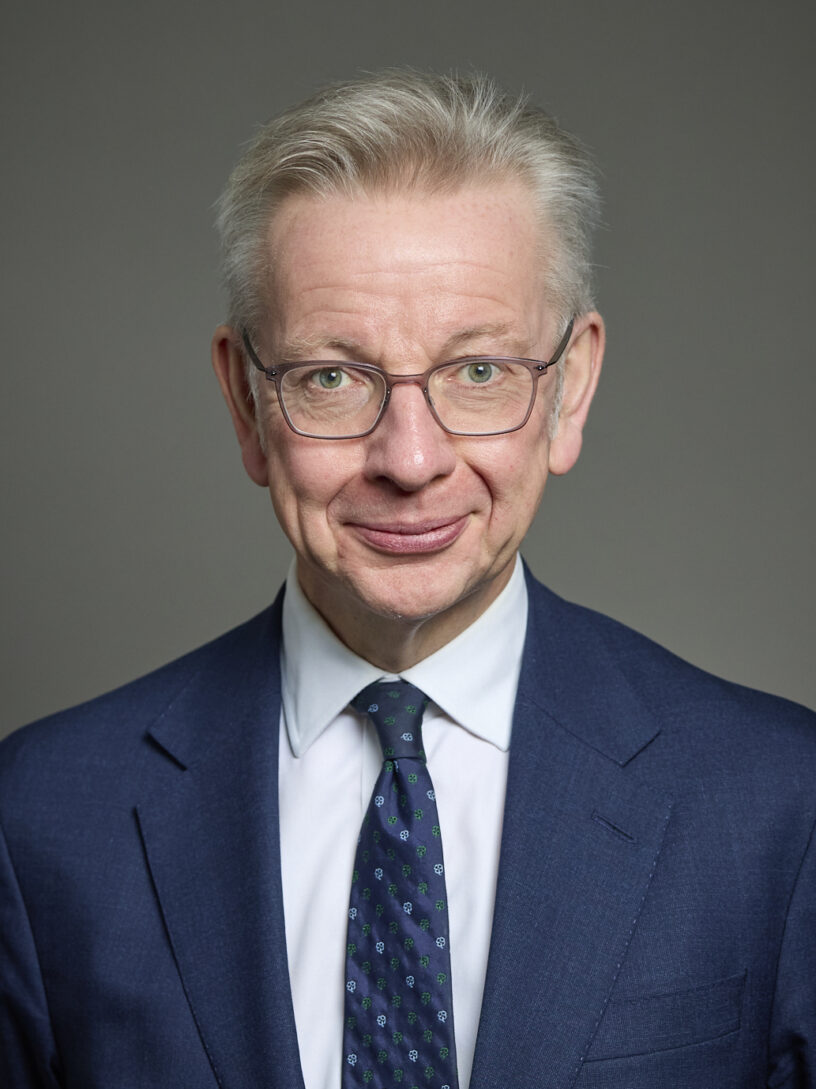
In this episode, we talk to Baron Gove of Torry. Entering Parliament in 2005, as MP for Surrey Heath, Michael Gove was Shadow Education Secretary from 2007, and Secretary of State for Education from 2010 to 2014. His subsequent government roles included being Minister for Justice, and Secretary of State for the Environment, Food, and Rural Affairs. Standing down as an MP in 2024, he now edits The Spectator.
His tenure proved controversial among teachers, and consequential for the education system. As Daisy Christodoulou put it, he “set the contours for the next half century.” In this interview, I wanted to understand the contours he aimed for, how he sought to pursue them, and what he had learned from the experience.
We discussed:
- His diagnosis of the challenges facing English schools in 2010
- How he sought to make the Department for Education deliver his agenda
- The curriculum review, and why he became closely involved in it
- The balance between autonomy and prescription
- The goals of the academy programme
- What he took with him to the Ministry of Justice and DEFRA
- His reflections on the process, and his approach
Unbowed in his belief that “knowledge should not be restricted to an elite, and that the best that has been thought and written belongs to everyone,” he reflected also about how picking his battles, and “a greater degree of imaginative sympathy for people on the other side” might have helped.
You can listen to the episode on Spotify, or Apple Podcasts, or read the full transcript below, lightly edited for clarity.
You became Shadow Education Secretary in 2007. Could you tell us what your diagnosis of England was and how you came to reach it – what Nick Gibb described (in Reforming Lessons) as the “intellectual legwork” you had been doing – in order to reach those conclusions?
I’d been interested in education policy, both as a journalist and as an individual, ever since I was an undergraduate. I inevitably felt, on a personal basis, that because of my own background and the good fortune I’d had, one of the most important things a government can do is to get education right – to give people the chance to direct their own destiny.
Looking at the English education system in detail for me, after I got elected, began early on in the 2005 Parliament, because David Cameron was Shadow Education Secretary before he became leader, and I worked in his support team. It struck me then that there were two things in particular of concern, which remained preoccupations throughout.
One, even as GCSE and A level results seemed to suggest that England was doing well, and that English students were improving their performance, if you looked at international comparisons, we were falling behind.
Secondly, the gap between the performance of students from wealthier and more comfortable backgrounds and students from poorer backgrounds was not just persistent and stubborn, but growing. This was under a Labour government. It struck me that the two big issues in education were whether or not we were improving – and even if we were, why we were falling behind other countries – and secondly, how could we close the gap between rich and poor.
Nick Gibb’s description was of research papers all over your office. What were you doing that was helping you to identify why that gap was emerging, and why things were getting worse?
I was fortunate in that some work had been undertaken before I ever became Shadow Education Secretary by my immediate predecessor, David Willetts – who was also in the shadow cabinet at that time as the universities and skills spokesperson – and by David Cameron, because of his interest. There were a group of people who were involved and engaged in education policy already: Chris Skidmore, who went on to become a Conservative MP and minister; Rachel Wolf, who was working for Boris Johnson at one point and then went on to become a highly successful ideas entrepreneur, and the founder of the New Schools Network; and others like Elena Narozanski, a special adviser who worked with me. They were all intellectually open and engaged. And of course, Dominic Cummings, a figure whom most listeners to this podcast will have heard of in various incarnations.
So there were a group of us who were interested in policy, and in asking questions about what was required in order to improve the school system. We were also struck by the fact that Tony Blair, in office, had started out arguing that the most important thing was standards, not structures — using it as a soundbite in a way, to criticise what he might have thought of as a particular Conservative preoccupation with school autonomy. But over time he, and the most imaginative people in his government, had recognised that the two were interlinked.
The fact that you have to look at education overall as a system – that there is no simple single lever -struck me as particularly important. Therefore, what one had to do was to look at what happened in genuinely high-performing systems and what were the things that they did – with respect to school autonomy, the curriculum, the quality of teaching, and so on – which characterised their success.
You were in Singapore? Sweden?
I visited the United States, Sweden, Singapore, Hong Kong, China, and latterly Poland. I also talked to Michael Barber, who helped with school reforms, and looked at the work that McKinsey and the OECD had done, which examined high-performing education systems. Also – thanks to Nick Gibb – I engaged with the work of E.D. Hirsch, Daniel Willingham and other American writers who have been styled “the trads” – who were critical of what had become known as progressive education on the grounds that it wasn’t progressive at all. The so-called progressive approach – a move away from teacher-directed learning towards self-started learning, a move away from a knowledge-based curriculum towards a skills-based curriculum – had actually set children back and exacerbated social inequalities.
So it was a combination of visiting and seeing high-performing jurisdictions, reading the published, open-source research about what worked, and also engaging with the philosophical, and in some respects scientific, background of how students could learn and grow in school.
Everyone was struck by how quickly you moved when coming into power. You were in in May, with an Academies Bill through by July. I’d love to hear a little about what made you believe it was necessary to move so quickly, and what preparations you had done that allowed you to have a bill on the statute book within two months.
I knew before I entered office – and every moment I’ve spent in office has only reinforced this – that you have to move quickly in order to effect meaningful change. I remember talking to a New Zealand minister shortly after taking office and asking him what was the single most important thing to bear in mind in government. He said to me, “It’s later than you think.” That reinforced all my instincts that you had to move with speed. That can sometimes cause problems, because the “doctrine of unripe time,” which many civil servants live by – the idea that if you’re ahead of the pack, if you’re the pioneer not the settler, you end up with arrows in your back – was very much in the minds of others. But I thought: there’s no knowing when you might lose ministerial office, so use every minute that you have.
I was also struck by the fact that Tony Blair, when he was elected in 1997, had as his first piece of legislation, very early on, the abolition of the assisted places scheme and the allocation of money from that scheme to reduce class sizes in primary school. It seemed to me that the tone of any Conservative-led administration might be set, post-2008, by the need for spending cuts. We needed to show that this was a government that was also reforming, as well as exercising fiscally conservative discipline. This was the area that I knew David Cameron cared about and therefore where we could enjoy political backing.
I’m interested in the process of making a ministry work effectively – a topic that gets more attention now than it did in 2010. What did you and your team do to get the Department for Education functioning as you wished?
I’m very aware that different government departments have different characters. A lot depends on the political climate and the degree of permission that any prime minister is prepared to give a minister. I was fortunate, in that David Cameron was interested in this policy area but also prepared to give me latitude; that George Osborne supported the notion of reform at a high level, and then supported us in detail when it came to some of the conversations we needed to have with the Treasury. I was also fortunate that, when we were in a coalition government, at that point Liberal Democrat education policy at that point coincided with ours. People like David Laws pre-eminently, but also Nick Clegg and Sarah Teather, were either tolerant of or supportive of what we were trying to do within the department.
Within the department, the first thing was I made sure that we had auxiliaries – people who had experience either of the education system, or business, or both – who were able to complement the team already in the department:
- Outside business people like John Nash and Theo Agnew, who themselves went on to become ministers, became non-executive directors of the department and were responsible for helping.
- Jonathan Hill, someone who had deep experience of government, and had been Political Secretary to John Major, accepted a peerage to become an academies minister – to be our own, lower-key but just as effective, version of Andrew Adonis.
- We had a special adviser team that was not just enthusiastic but also committed to the mission of educational reform. For them it was personal: Elena Narozanski, Henry de Zoete, and then – as a policy, rather than a special adviser – Sam Freedman, who has subsequently gone on to become very well known as an analyst of public policy.
I was fortunate in that there was a constellation there. Within Whitehall, and the department, there was a sense that this was an area where in opposition the Conservatives had said they were going to move quickly, so Whitehall naturally – notwithstanding some of the problems with getting things done in government – feels that if there is a particular department that is in the Prime Minister’s sights as a department that needs to be active, the juices run faster.
Dominic Cummings has said “It was purges, it was firings” – is that an exaggeration?
No, that was a necessary part of it. One of the things that was problematic, particularly early on, is that there were some people in the Department who – entirely understandably – had been very fond of Ed Balls. There were some people who were ideologically very strongly pro-Labour and anti-us. So we faced internal sabotage at first. We had emails leaked; our diary schedule shared. Other people within the department, even if they weren’t ideologically antagonistic, didn’t like the fact that some things had to change. We had people in the quango responsible for school buildings, Partnerships for Schools, who resented the way in which we were undoing a lot of what they’d been committed to. So there was active resistance – attempts to frustrate by interfering in the political process – plus passive resistance.
There were also elements of the department where people had just got used to a very different way of doing things. When we talked about the vital importance of sweeping away some of the regulatory and red-tape burdens that individual teachers faced, the approach from some was, “That sounds like a great announcement. That will fill the news grid.” But there was no actual desire on their part to conduct the audit we wished to, or to engage with our identification of precisely what needed to go. So over time, there were changes in personnel – there were some people whom we worked with very well throughout, but there were other people who were moved on and out.
Tell us about the curriculum review. What were you setting out to do? What was the process like of managing to achieve that?
The curriculum review was designed to ensure that we had a curriculum that learned from and through comparison with the highest-performing jurisdictions, and in particular that we emphasised the importance of a knowledge-rich curriculum. For generations now, there has been a fashion – which is a very old-fashioned fashion – that people don’t actually need to know stuff. The assumption is: “You can get it all in the library, or on Ceefax, or on your phone – AI has it.” But wherever information is stored technologically, you need to know what to ask, where to look, how to make sense. The more you know, the more confident you are in that area. The more that is in your working memory – the more that’s committed to memory and doesn’t require effort to extract – the more creative you can be. If you can sight-read music, if you are someone who has developed mental arithmetic skills that allow you to make calculations at speed, then you are far more likely to be the next Bach, or Fatboy Slim, or Fields Medallist or Nobel Prize winner, or successful racing tipster or hedge-fund billionaire. The vital importance of knowledge had been underappreciated.
There’s a Scots phrase, “the democratic intellect.” One of the glories of the Enlightenment is that knowledge should not be restricted to an elite, and that the best that has been thought and written belongs to everyone. The idea that Shakespeare, Byron, Newton, Leibniz, Balzac, Dostoevsky – great minds that have made amazing discoveries or generated superb insights – are for a narrow elite is, to my mind, offensive. Everyone should have the chance – they may not want to, of course – but everyone should have the chance to become acquainted with that. School is where that happens, particularly if you don’t come from a privileged background. So the curriculum was designed with that in mind.
I was very influenced by a book by Jonathan Rose, The Intellectual Life of the British Working Classes, which makes the point that in the Victorian era, and the early 20th century, you had people who were working all the hours that God sent during the day who – in the time between arriving back exhausted from work and falling asleep – would deliberately seek out knowledge, and set to reading works that we would consider classics and which some in education would consider to be inaccessible. It was so patronising. That was one of the things that drove it. I was very lucky that Tim Oates from Cambridge Assessment – someone steeped in how assessment works and how high-performing jurisdictions succeed – was prepared to lead the effort.
What led you to become directly involved in elements like the history curriculum and the choice of texts?
I felt that you had to show direction and leadership. There is a tendency in the education system, at every level, always to lower the level of ambition. You’ve seen most recently, in a paper by Jonathan Slater, the former Permanent Secretary at the Department for Education – he almost makes a justification for grade inflation. For him it’s more important that people from poor backgrounds get the piece of paper that says they’ve passed than that they’ve acquired the knowledge that means they are able to pass. This widespread tendency always to underestimate the capacity of people to know and to master information, and to find excuses for underperformance, seemed to me to need a corrective. Therefore I was going to be as demanding as possible.
History also is ideologically contentious in a way that other subjects are less so. There might be a Tory and a Whig view of physics, and it’s certainly the case that science has become more politically contentious, particularly biology. But there are few subject areas that attract so much ideological and political attention as history, because it goes to the heart of who we are. Therefore any proposition you put forward is more likely to meet criticism. My central argument was: “The more students know about the past overall, and our past as a country in particular, the better. How can that be a bad thing?” What was striking is the way in which some very eminent academic historians, like Richard J. Evans, effectively attacked the idea of students knowing more. They used the debate about the history curriculum to rehearse some of their own disputes from academia, rather than thinking about making sure that more young people in this country knew our history and loved history as a discipline.
Did you expect more support from the history teaching community? Of all the people one would hope would be enthusiastic about students knowing more about history, that was where some of the most vociferous criticism came from. Does that reflect historians coming with their own agendas – that “Everyone should learn more about their particular niche” – what was the issue?
There was an automatic element of suspicion – that somehow we were trying to develop the history curriculum that an Afrikaner would have wanted to impose on schools in 1950s Pretoria, or the curriculum that Jefferson Davis would have wanted to introduce in the Confederacy – that this was a dark conspiracy to ideologically brainwash the next generation. In fact it was just about making sure that people knew more. History is the site of intense cultural warfare – has been in the past, is now. There was suspicion towards me because I was a Tory and had views in other areas that led to some resistance.
There was, regrettably, a worry about overload – about being asked to do too much – and also a worry, entirely fair, that teachers wouldn’t be able to teach, even with the best will in the world, so much of what was required. That would mean it was more difficult to secure the good passes at GCSE, which would mean that fewer people would then go on to take it at A level and university – there would almost be too much of a good thing. That the love of history would be suffocated by content. I don’t think that’s right, but I can understand it. It is never an easy thing for any teacher, no matter how much they love their subject, in the classroom or in conversation with other teachers, to say, “This Tory Education Secretary is absolutely right. We need to do better.” That is not the way to get someone else to pay for your round in the pub.
I’d love to talk about the balance between autonomy and prescription. It seems like one of the central tensions for the whole of the last fifteen years. When we read a document like ‘The Importance of Teaching,’ we very much get the impression that the goal is to free up schools and teachers to do what they know best. Conversely, with things like phonics reform and the new curriculum, we see a very different impulse: “Here are some things which are not being done consistently enough; you need to do them more.” What was your thinking about that balance, and how did that thinking change?
I am naturally in favour of the highest level of professional autonomy in almost every area – that is my general starting instinct. The key thing is though that you need to have:
- Discovery mechanisms, in order to identify what has been working most successfully so that it can be emulated.
- Accountability mechanisms, to show where failure occurs – in order to ensure that you can intervene, provide help, or have people be aware of what’s going wrong.
- Benchmarks against which people can measure themselves
- Sometimes you do need to have corrective mechanisms as well.
It is a useful prism, looking at all public service reform, to consider the balance between central direction and autonomy. But there is never a perfect prescription that says, “The right thing is 80% autonomy and 20% prescription.” As a general rule, you should always seek to give professionals the maximum amount of freedom to achieve clear goals against which they will be held accountable. Sometimes those goals need to be more tightly defined. Sometimes there need to be benchmarks or milestones along the way. Critically, you always need to have the means of intervening when failure occurs.
That’s a great opportunity to jump into the academies programme. It’s interesting that we see this big bang in 2010, but there were various things that weren’t included within it – multi-academy trusts, for example, aren’t really conceived of in the same way. What was your thinking initially about what was going to happen by opening the floodgates and allowing mass conversion? Did you think everyone would become an academy within ten years, or were you just seeking to create space for some of those mechanisms you’re talking about?
The academy legislation that Tony Blair had introduced provided us with a means, with some relatively simple legislative changes, to dramatically increase the level of autonomy across the system. Within the Conservative Party, there was a muscle memory of grant-maintained schools and what they had been able to achieve. One of the criticisms of grant-maintained schools in the past was that they had been islands unto themselves, and that some of the highest-performing schools – grammars, very good comprehensives – had taken advantage of that status, and that education as a system suffered, hence the need for local authority control. So it was in my mind that you should try to stress that with autonomy came responsibility. When schools achieved academy status early on, standalone academies had to demonstrate – arguably we were quite lax in policing this – that they were using some of their power to help another underperforming school.
I had anticipated a mixed-model economy, in that I thought there would be some schools that would choose to be and remain standalone academies, albeit in a relationship with others, but that multi-academy trusts would grow. I remember – even though we didn’t talk about them in quite those terms – being enthused by the already existing academy chains, such as Ark and Harris, and also being keen on the principle of things like the King Edward VI Foundation in Birmingham, or United Learning – which was an education charity that to this day has within it both independent, fee-paying schools and state academies. My argument was that there would and should be different organisational structures overall.
One thing that we probably did – I think everyone would accept this – is that after some initial resistance, the number of academies, particularly at secondary, exploded. This was on the one hand exciting proof that what we were offering was attractive to the profession and to school leaders. But it did mean that there were, in particular, one or two academy chains that expanded too fast and didn’t provide the support required, which is why both John Nash and Theo Agnew, while encouraging the growth of academies, also had to intervene and do some pruning. It’s also why the system of Regional School Commissioners (RSCs) came in later. I have mixed feelings about whether the RSC model has worked and whether it was the right model. But overall, my view had always been that most schools should be in groups – but it shouldn’t be absolutely prescriptive – and that there are some standalone academies that have, can, and should succeed. on their own.
The thing that struck me, looking into this, is that this is the only public service where we have a mechanism to deal with failure. If a hospital or police force is struggling, all you can really do is fire the boss and shout at them. We do now have a mechanism that allows schools to move from one trust to another, and the trusts provide that.
The whole point was that if a school was underperforming, a high-performing trust could and should take it over, and to broker that arrangement. The overall aim, as we talked about at the time, was to create a self-improving system. Improvement would be led by experienced teachers and heads – and there would be a culture of rivalrous emulation, in which each school learned from the other and tried to do even better – and that the moral purpose that leads most people into teaching would animate them. But of course, government was there, and accountability mechanisms – league tables and Ofsted – were there to help identify failure and also to home in on success, because you could sometimes have success in unexpected areas, from people who would not necessarily wish to be evangelical about it, but were concentrating on doing the very best for the children in their care.
Another interesting thing about the reform period, and the last fifteen years more broadly has been the intellectual ferment, and the role that teachers and researchers have played, which – my sense is, is unique – if you go to, even other Anglophone countries, you don’t find the same teacher writing, blogging, and tweeting. My hunch is partly it was the openness to those ideas at the top, and partly getting lucky that this is a period when blogging became very easy. You see the same in other fields – suddenly everyone can write.
How did that teacher-blogging social movement influence, support, aid – or hinder your reforms?
It was hugely important, and you are absolutely right to pick up on it. Before 2010, broadly, if you had teachers referred to in the media, that would normally mean teaching unions. If the unions – and I don’t mean to deprecate them all or everything they say, it’s a more complicated picture than that – but as a general rule, it would be, “Teachers believe X, teachers want Y,” and that was the view of the NUT or the NASUWT.
What one saw was, around that time – coinciding with but not caused by our arrival in office – more and more individual teachers blogging and tweeting about what was going on in the classroom and different approaches. Old Andrew, initially and preeminently, but joined by others, gave voice to a growing group of teachers who were interested in research about what works, fascinated by brain science, often opposed to previous government policy, because they regarded it as neglectful of what they knew worked in a classroom setting.
Having that meant that we now had a conversation about education, in which teachers were involved, which wasn’t just about resources or cuts. Money matters, of course. But it meant that the question was, “What’s going on in the classroom? How do you actually ensure that children learn more and there is fruitful engagement?” It’s an arid and empty argument to have the voice of the teaching profession restricted to a few organisations whose overwhelming aim, understandably, is to get the maximum amount of money into the system and place the minimum effort on their members.
You then go on and later run the Ministry of Justice and then DEFRA. What did you take to those departments from your time at the Department for Education? What had you learnt? What did you come in and decide to do differently?
Each department in which I worked had a slightly different set of problems and challenges, but there were things I’d learned during my time in education that applied in all of them. One of the things with education is that quite a lot of the reforms we introduced were controversial. I think no matter how emollient or thoughtful any individual would have been in introducing those, they would have inspired a strong reaction. I subsequently discussed with friends was it the case that I was too confrontational. The correct view, was Dominic Cummings’s, which is – inevitably if you’re going to change something, controversy will occur, but I got involved in too many other disputes, peripheral to that, which weren’t to do with the main day job. Overall, in future government roles I tried to be clear and determined, but I was conscious that you needed to preserve a degree of political capital, and not get drawn into any unnecessary – I stress, unnecessary – conflict.
At the Ministry of Justice it seemed to me that we had a situation in prisons and the court system where the need for reform was even greater, and the unreformed state of prisons and our courts was even more parlous than had been the case with the school system, even pre-Blair. But I was only in that role for about 16 months, so while we correctly identified many of the problems, we weren’t able to change as much as we might have wanted.
At DEFRA, the two key overlaps were: one, the environment, like education, is a system. Sometimes people in education policy say, “The single most important thing is structures,” or, “We need to go back to selection,” or, “The most important thing is creativity,” or whatever. Attempting to isolate one element is like attempting to take a single ingredient and saying “That is the thing that makes a recipe successful.” That is even more so in the environment, where the relationship between how a food is produced, the soil in which it is grown, the landscape and habitats that sustain the public goods that we rely on, and mankind’s impact on all of that – all of that you have to see together. If you say, as DEFRA Secretary of State, “My aim is to maximise food production,” then you take things out of kilter. There has got to be an overall sense of harmony, in the same way as if you say in education, “What I want to do is to have a more demanding curriculum” – that’s great, but you’ve got to worry about who is going to teach it, how it is going to be examined, and so on.
The other thing I took to DEFRA was the principle that you develop a team, including people who come from outside the department – auxiliaries and advisers who care deeply and are prepared to think originally. One person who helped me in all three departments was a wonderful guy called Tim Leunig, who is an economist. He is a one-man – not just a think-tank, a think-armoured division, in that he can generate so much. He is also, still to this day I think, a Liberal Democrat. I’m not saying this in an effort to appear non-partisan, because I’m as ideological as the next person, but you have got to, in politics, search for allies. That doesn’t mean weakening your intent – it means that if there are people from other parties, other traditions, or outside conventional politics who happen to agree with you on the issue, snap them up, get them in, get people working behind it.
You came out of office in 2014, and the Conservative Party, succeeding the Coalition, remains in office for another ten years. How happy were you with the way your reforms were stewarded and continued?
It’s very difficult, having been in any government department, to be an objective judge of successors. On a personal basis, I liked them all. Nicky Morgan, my immediate successor, had a tough job because there were some people who were critical of my being moved, and all the rest of it. I think she did a very good job, but the parliamentary Conservative Party, for reasons which I think were strictly irrational, revolted against her move towards full academisation. I think she was absolutely right – but there was a certain public-service NIMBYism on the part of some of colleagues. I thought Nicky absolutely got it. We have a slightly different view about how character works in education, but no one has identical views to me on everything.
Justine I think found it difficult, because the one thing that Theresa May most wanted to do as Prime Minister, having appointed Justine, was to move towards a greater level of selection – bringing back grammar schools, or a form of them. Justine was both opposed by temperament and reinforced in her opposition by Jonathan Slater when he was Permanent Secretary. So, while I think Justine enjoyed the role, there was tension there. I don’t want to put blame on either Theresa or Justine – both points of view are legitimate. But it was a period of relative stasis.
Damian Hinds is a very good friend of mine, cares passionately about the subject, and knows everything about it. Again, I think it was difficult at that time because the dark cloud of Brexit agony and resolving the question hung over that Parliament.
Then Gavin Williamson was appointed by Boris Johnson, when he became Prime Minister. Gavin gets a bad press, partly because of the image he sought to cultivate. But this was a job he wanted to do. Friends of mine, both who worked in the Department and at Ofsted, say that he has been consistently underrated, that he had a good sense of what really matters – but he was knocked sideways, as indeed the school system was, by COVID.
Following on from Gavin, there was a quick succession of Education Secretaries who had an incredibly tough time. It would be churlish to have expected people in the period after Boris Johnson’s fall and the Liz interregnum to have achieved an enormous amount in that role, because it was becoming progressively more difficult to move into energetic reform territory. Each of the people who did the job after me faced challenges, but all of them, I believe, were keen to move in the right direction or managed to move things in the right direction.
When I interviewed Daisy Christodoulou, she echoed David Cameron in describing you as a “Maoist” in terms of your belief in constant reform. In his book, Nick Gibb describes you as willing to make enemies and thriving on constant change. Are those fair descriptions?
I don’t know, because it’s very difficult to have self-knowledge – that’s one of the reasons I prefer externally set and marked tests, rather than teacher assessment. A lot needed to change in our education system, and you’ve got to, got to aim higher than most people in the system feel comfortable with if you’re going to drive change. No one would criticise a football manager for saying, “I want the very best performance; I’m going to demand a level of fitness and commitment from the people whom I select beyond that which they might think they’re capable of.” Comparing an education system to a sporting endeavour might irritate sports fans or annoy teachers. But I hate the idea of settling for mediocrity, and I dislike the idea that you should say, “Look, Michael, shut up — this argument is boring everyone,” when someone else is in the wrong, or at the very least has avoided engaging properly with the question. That has probably cost me politically and it has certainly restricted my social life. But being an awkward bastard – yes, guilty.
If we go back in time to 2010, and you know what you know now about education and governance, but let’s say you don’t know about Brexit and various other things — what would you do differently?
One of the things I would have done differently is that I would have strenuously avoided getting ensnared in other issues. Partly maybe because I was a journalist, or for other reasons, I was always happy to get stuck into debates about other areas that I cared about where I thought that as a government we might be getting things wrong. People assume that that’s what cabinet government is about – that it’s a collective exercise, but actually it uses up time and political capital.
The second thing is exercising a greater degree of imaginative sympathy for people on the other side. While I’m very keen not to dilute the power and force of an argument that you are making – because it needs to be tested. It’s also critically important to realise how the changes that you are making will be experienced by those who are implementing them. Even if you know, every piece of objective evidence knows you that you’re right, saying to an individual institution or an organisation, “You can do even better,” will be taken by some people as an implicit or explicit criticism. Being aware of that, more, I think.
This is what Nick said as well – becoming part of the governing team for the David Ross Educational Trust made him realise how tough things were for teachers, and that when he came back into office he tried to… Michael Gove, thank you very much.